

Divya’s Weekly Notes #003
Embroidery, deadly default's @ the doctor's, and shipping vs building speed in AI & big tech

Things I couldn’t stop thinking about this week:
01: I didn't think embroidery had anything to do with vibe coding.
02: Deadly defaults: what a doctor's office taught me.
03: So are big companies actually shipping faster, or just building faster?
01 - I didn’t think embroidery had anything to do with vibe coding
I tried freehand embroidery this week: no template, no drawing, just going for it. (I should mention this is my first time trying my hand at embroidery.) It came out okay. You can tell it’s a flower, just now a great flower.
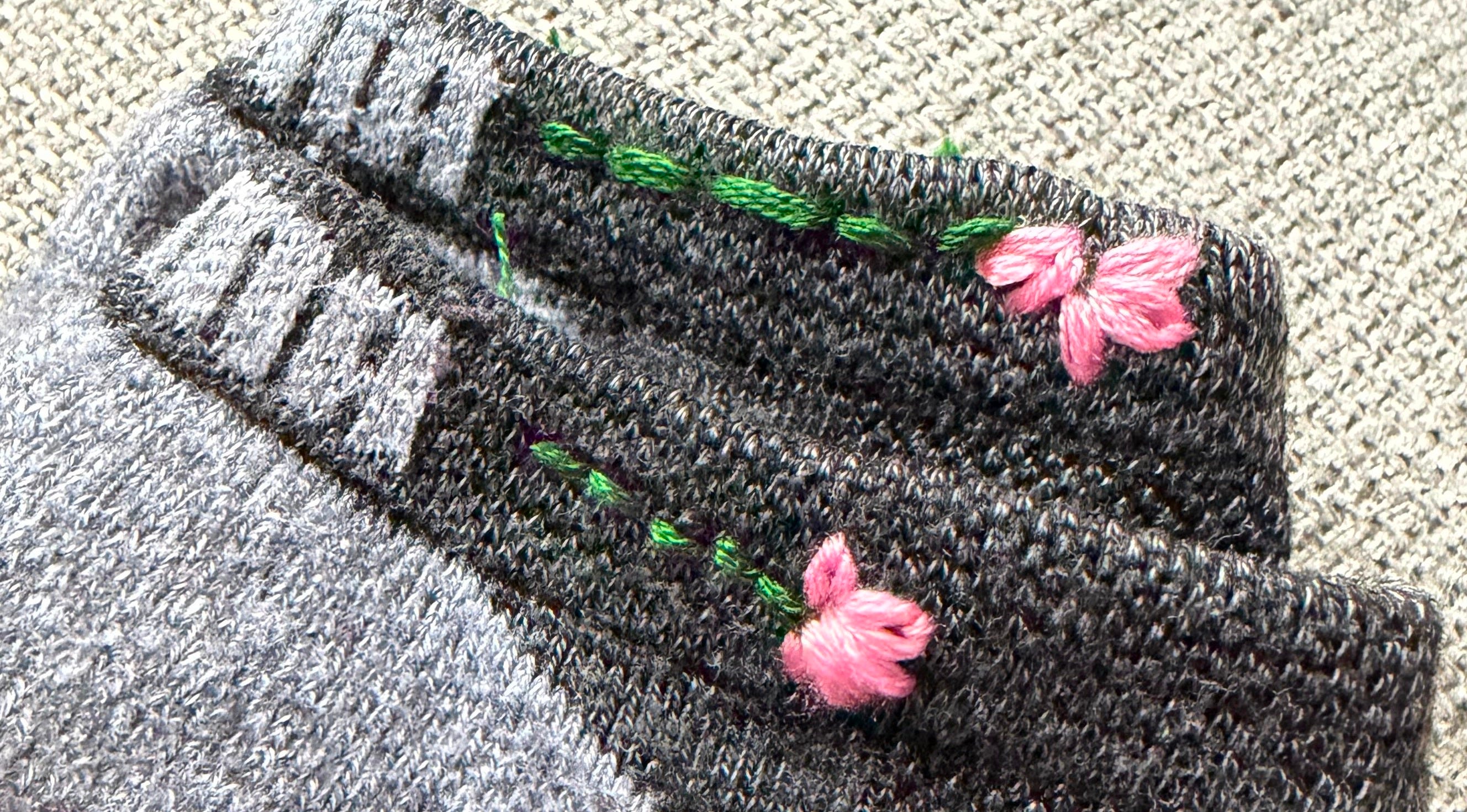
It reminded me of something I’ve been noticing with vibe coding. When I just build as I go, it works fine…until it doesn’t. When I take time upfront to write a PRD, something shifts:
The agent needs fewer corrections mid-build
Outputs are closer to what I actually envisioned
I spend less time on random bugs and more time improving the actual product
But here’s the thing: just like embroidery, when you get better at the skill, you need less explicit structure. I don’t need a template for flowers anymore because I’ve practiced enough that the structure is embedded in how I work. The same goes for prompting. A PM who thinks in PRDs will write prompts that are innately structured like one. They’re not skipping the thinking, they’ve just internalized it.
The PRD isn’t just documentation. It’s the thing that keeps you from producing a slightly sad flower and calling it done.
Building with intention beats building with momentum. The constraint forces the clarity.
02 - Deadly defaults: what a doctor’s office taught me
This weekend I got to shadow Dr. Kanu Patel at his practice: partly a learning experience, partly just a good excuse to hang out with father in law. I’ve been loosely aware of EPIC (the healthcare software that runs basically everything), but seeing it up close was something else.
A few things on AI adoption in healthcare:
Doctors need to see what AI can do before they’ll invest time configuring it. The vision has to be concrete.
Connecting AI to existing systems like EPIC requires technical help and serious time upfront
The payoff is real, but the setup cost is high, and doctors are not exactly the people with spare hours
But this is the story I can’t stop thinking about:
one AI transcription tool defaulted to marking any patient condition not explicitly discussed in a visit as “normal.” If you didn’t ask, nothing was wrong.
In one case, a doctor skipped asking about a patient’s extremities. The tool marked them as normal. The patient was missing a limb from a prior procedure.
The limb wasn’t relevant to that visit. But the patient note was now factually incorrect. And in litigation, that note becomes evidence of the doctor’s judgment.
Dr. Patel’s suggestion: either leave undiscussed conditions out of the note entirely, or mark them as “not asked about.” Both are more honest than a false normal.
The most dangerous product decision isn’t a bug — it’s a default that quietly fills in the (wrong) blanks for you.
03 - So are big companies actually shipping faster, or just building faster?
Prototyping is getting faster across the board for engineers, designers, PMs. But what percentage of those prototypes are actually getting in front of customers, let alone shipped?
At big companies, using AI for internal processes gets applause. But internal efficiency isn’t always what’s blocking shipping. The bottlenecks are prioritization, alignment, and the gap between “we built a thing” and “a customer actually used the thing.”
I’m genuinely curious how enterprise teams are thinking about the handoff from prototype → build → ship. Because right now it feels like we’re optimizing the part of the process that wasn’t broken. But I could be wrong!
I think the real question isn’t how fast can we build. It’s how fast can we learn to then ship the right things.
Other interesting reads and finds:
👩🏽 Oura launched an 🔗AI model trained specifically in women's health. I'm curious to test how it compares to a generalist model like GPT-5 or Claude; domain-specialized vs. broadly capable is an interesting design tradeoff I can plan dig into in a future issue if that’s of interest.
💊 An article on 🔗 Ozempic and addiction caught my attention: rather than just suppressing cravings, it seems to shift people's baseline from feeling like something is missing to simply feeling fine without it.
🍒 Jayashree Ratan started knitting handmade breast prostheses, called 🔗 Knockers, for a breast cancer survivor she knew. Thousands are now being distributed across India through Saisha. It's a good reminder that innovation doesn't always come from a lab, and that culture shapes what actually reaches people. Learn more at saaishaindia.org.
How would we know a prototype will have PMF until it’s tested in the wild? You said prioritization and alignment is the bottleneck—I feel that AI enabling fast prototypes enables a bottoms up prioritization rather than top down (which I consider better / higher signal). At least, that’s what i’m seeing at my company. What are your thoughts?